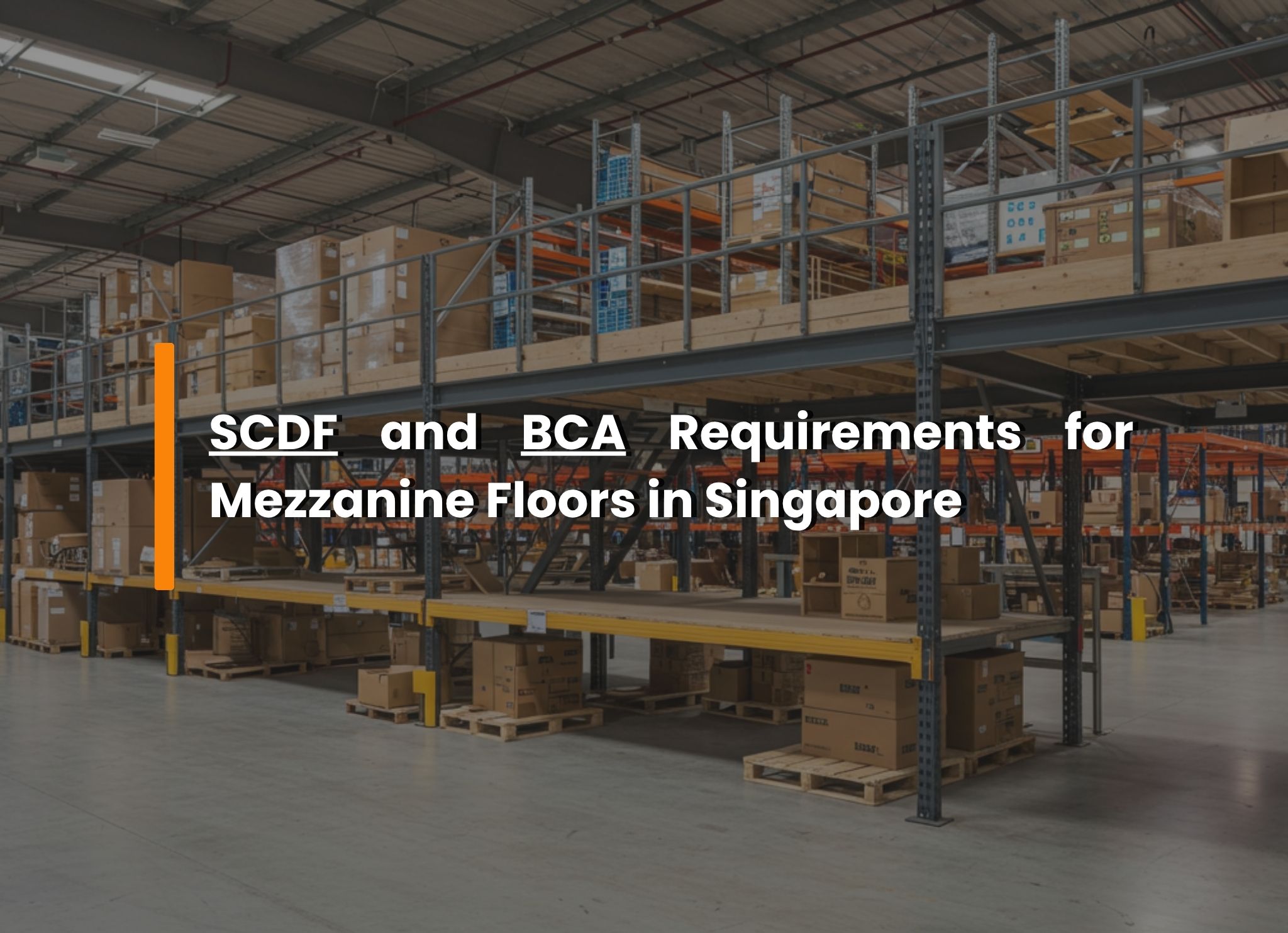
If you’re running a warehouse or industrial space in Singapore, you’ve probably considered installing a mezzanine floor at some point. After all, it’s one of the smartest ways to add usable space without expanding your physical footprint — something that’s gold in land-scarce Singapore.
But here’s the thing: a mezzanine isn’t just “extra space.” In the eyes of the authorities, it’s considered building works. That means you can’t just call a contractor, bolt some steel beams together, and call it a day. You’ll need proper approval from both BCA (Building and Construction Authority) and SCDF (Singapore Civil Defence Force).
Let’s break down what’s required — and why skipping any of it could cost you way more than you think.
Understanding Why Mezzanine Floors Are Regulated
A lot of business owners assume that if the mezzanine is inside the building and not visible from the outside, it’s fine. Or they think if it’s not being used as an office or public area, the rules don’t apply.
Unfortunately, that’s not how things work in Singapore.
Whether you’re using your mezzanine for light storage, packing stations, or office space, the moment it’s permanent (i.e., bolted in, supports weight, changes building layout), it falls under BCA regulations. And if it affects fire safety — like escape routes, sprinklers, or detection systems — SCDF is involved too.
Skipping approvals can result in:
- Fines and penalties
- Stop-work orders
- Forced removal of the structure
- Legal liability if something goes wrong (e.g., collapse or fire)
And if you ever plan to sell, lease, or renew fire insurance for the space, unapproved mezzanines will be a big red flag.
Skipping approvals can lead to fines, stop-work orders, or even demolition. A notable example is the Toa Payoh mezzanine floor collapse in early 2025, where unauthorized modifications contributed to structural failure.
So What Do BCA and SCDF Actually Look For?
BCA: Structural Safety
BCA wants to make sure your mezzanine is safe to stand on. Seems obvious, right?
Here’s what they expect:
- Your mezzanine must be designed by a Qualified Person (QP) — a registered engineer or architect.
- The QP will submit the design to BCA via CORENET X, along with load calculations and material specs.
- Everything needs to follow local standards (e.g., SS EN 1993 for structural steel).
- After installation, the QP or inspector signs off that the build matches the approved plan.
If your floor is intended to hold heavy items — like racks with pallets or even forklifts — the structural design becomes even more critical.
SCDF: Fire Safety
SCDF is all about fire code compliance. A mezzanine changes how people evacuate a building and how well fire protection systems work.
What SCDF typically checks:
- Are the escape routes clear and wide enough?
- Does the mezzanine have smoke detectors and alarms installed?
- Have sprinklers been extended to cover the new space?
- Are materials fire-rated if needed?
- Can firefighters access the mezzanine safely?
If you don’t have answers to these, your Fire Safety Certificate (FSC) might be denied. And without an FSC, your business can’t legally operate.
Common Mistakes to Avoid
These are the issues we see most often:
- Installing a mezzanine first, then asking about approval later.
- Overloading a mezzanine with pallet racks beyond what it was designed for.
- Not extending sprinklers or smoke detection to the mezzanine level.
- Blocking emergency exits with shelving or stock.
- Assuming “modular” or “pre-fab” systems don’t need approval — they often do.
These mistakes usually end up costing more to fix than doing it right from the start.
Real-Life Lessons from the Ground
The Toa Payoh Collapse (Jan 28, 2025)
You may have heard about the warehouse collapse in Toa Payoh earlier this year. A mezzanine floor gave way, injuring workers and bringing business operations to a halt. Investigations revealed the floor was installed without BCA approval and didn’t have proper load-bearing support.
It became a cautionary tale. BCA and SCDF issued public reminders urging companies not to skip structural approvals, no matter how “simple” their mezzanine may look.
Read more about “The Toa Payoh Collapse” Here
Final Thoughts
A mezzanine floor can be a great asset for your business — more space, better layout, improved operations. But only if it’s built properly and approved. Otherwise, it’s a liability waiting to happen.
In Singapore, compliance isn’t just about avoiding fines. It’s about ensuring the safety of your people, your property, and your peace of mind.
If you’re planning a mezzanine, already have one, or just want to find out if you’re compliant — reach out. A quick chat with our team could save you a lot of time and trouble later on.